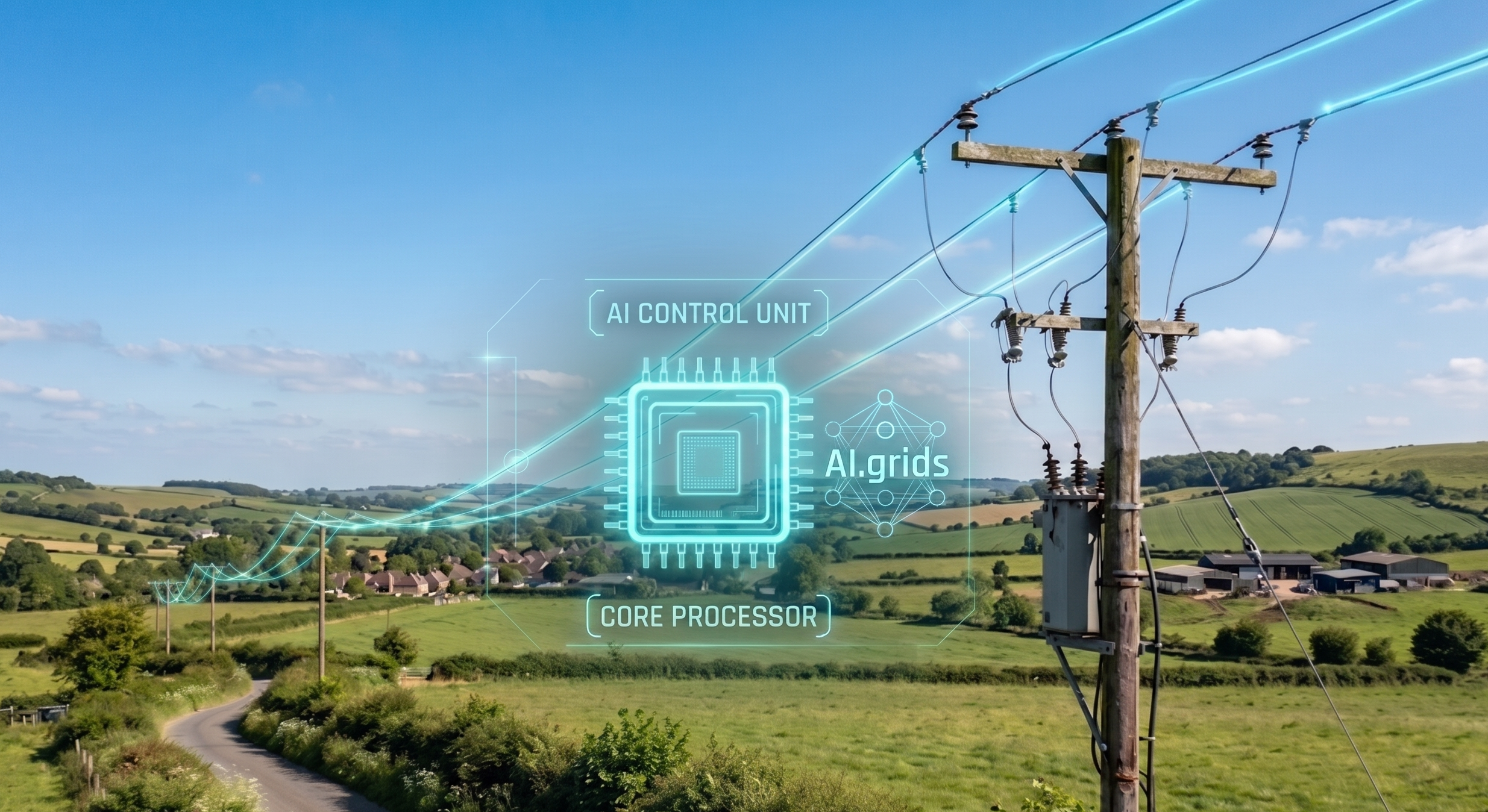
We are joining AI.grids initiative
We have joined the international initiative “AI.grids”, which aims to develop a European artificial intelligence (AI) foundation model for electricity grids. This is an ambitious collaborative project bringing together electricity network operators, research institutions, and technology partners across Europe. The initiative seeks to accelerate the digital transformation of the energy sector by developing advanced AI solutions capable of analysing complex grid data, forecasting operational scenarios, and supporting more efficient decision-making in both day-to-day operations and long-term planning.
Participation in the “AI.grids” project is an important step in strengthening our competencies in artificial intelligence and in building a smarter, more flexible, and more reliable electricity infrastructure for the future.
Electricity distribution networks today are facing rapidly increasing complexity:
• growing share of renewable energy sources (solar, wind);
• rapidly increasing number of electric vehicles;
• decentralized generation and bidirectional energy flows;
• the need to manage grid loads in real time while ensuring reliability.
Traditional analysis and planning tools are often not flexible or fast enough to effectively address these challenges. In addition, a significant portion of data remains underutilised due to its complexity, fragmentation, or limited accessibility.
The “AI.grids” initiative aims to develop a common European AI model capable of:
• processing different types of grid data (time series, topology, textual information);
• performing advanced forecasting (load, generation, grid state);
• supporting optimization of grid operations (e.g., voltage control, congestion management);
• accelerating the connection process for new consumers and producers;
• supporting grid planning and investment decisions.
A key aspect of this solution is collaboration: the model is being developed based on the data and experience of various European grid operators, ensuring its applicability across different countries and systems.
The project is currently at an early but very important stage. Following the signing of the consortium agreement, active work has started in several key areas:
• identifying priority use cases;
• defining required datasets and data-sharing principles;
• developing the model architecture and training strategy;
• establishing working groups involving both technology and grid operation experts.
Our organisation will actively contribute to these activities, aiming to share our knowledge and experience and to ensure that the developed solutions meet the real needs of electricity distribution networks.