From Prosumers to Flexumers: the new leap of faith in the Lithuanian energy sector
For the last decade, a lot of the Lithuanian energy narrative was defined by a singular figure: the Prosumer. Now in 2026 these almost 170,000 pioneers turned rooftops or remote fields into power plants, trading their surplus solar electrons for “credits” in a virtual grid storage system. It was a successful model that helped Lithuania reach a staggering 2.1 GW of installed Prosumer solar capacity.
But as we settle into 2026, that model is reaching its physical and economic limits. The grid is no longer just a passive place where we dump the energy – it is a living, breathing organism that needs an increasing amount of balance. With the successful synchronization with the Continental European Network in 2025, the “technical safety net” provided by the old BRELL ring/system is gone. We are now responsible for our own frequency and stability.
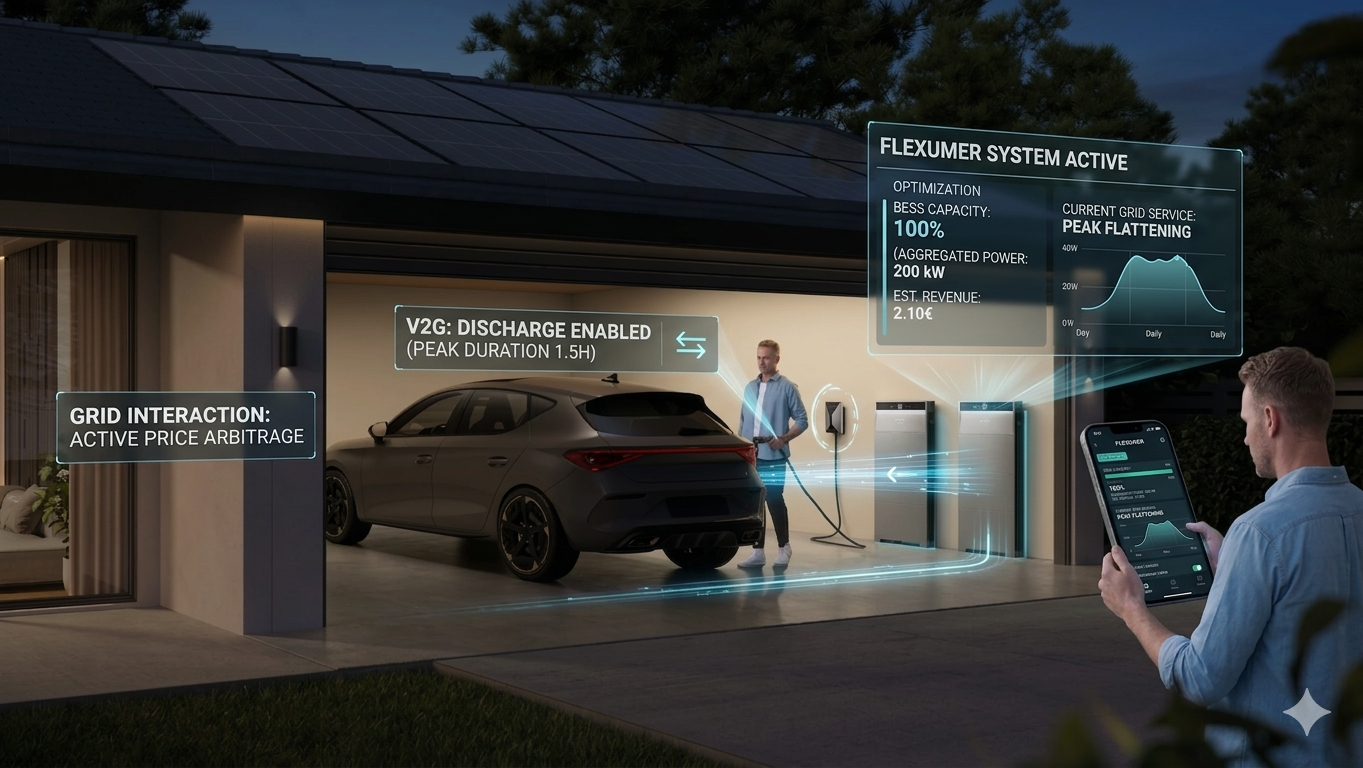
This year we are entering an active new era of the Flexumer — the “Flexible Consumer.” If the prosumer’s goal was production, the flexumer’s goal is optimization and balance. Armed with smart meters, solar power plants and Battery Energy Storage Systems (BESS), this new generation of energy users is transforming from passive participants into active partners for grid operators and those responsible for energy portfolios and their balance.
The Numbers: A Tipping Point for Flexibility
The shift isn’t just a trend, it’s rather a necessity. According to data from the Lithuanian Energy Agency (LEA) and ESO (Distribution System Operator), the prosumer community grew by nearly 60,000 new users (and almost 700MW) in 2025 alone. As of early 2026, total prosumers have almost reached 170,000, meaning roughly 10% of Lithuanian households and some businesses are now energy producers. Also, it is estimated that already today there are over 200MWh of BESS capacity installed and ready to potentially be aggregated and utilised in the private and C&I sectors. This is a significant amount even for the whole Baltic region.
However, this success created the “Lithuanian Duck Curve.” During sunny afternoons, solar generation often exceeds total national demand, driving market prices toward zero—or even into the negative territory. Conversely, in the evening, as the sun sets and the country plugs in their EVs and heat pumps, demand spikes.

NordPool electricity price LT, “Lithuanian Duck Curve”, 2026.04.02
The more Flexumers with flexible assets we have the better system operators can ensure the stability of grids. Even more importantly – the better the grid stability and control the more renewable energy assets such grid can integrate. Flexumers are one of key enablers for a very green, independent and a super-competitive energy system of Lithuania.
Battery may be your new “Part-Time Job”
Still very recently a battery was a luxury for “off-grid” enthusiasts or a backup for power outages. In the flexumer era, a battery is a financial asset.
With the recent completion of the mass smart metering rollout almost every energy consumer now has the granular data needed to play the market. A flexumer uses their BESS not just to store solar for the night, but also for Price Arbitrage or even could engage in business with an aggregator that exposes these assets to ancillary service and balancing markets.
Such opportunities to earn additional income from BESS assets could actually become an automated “part-time job” for many private and C&I BESS owners making them a “Flexumer”.
Three key regulatory shifts are needed
To have more Flexumers, a better grid health and hence – green capacities we still need a few regulatory tweaks.
The system that helped the number of prosumers pick up from ground-up is now becoming a hurdle for the next – flexumer stage. As energy surplus accumulation for the winter season in kWh instead of euros was a great assurance for the first prosumers, now solar PV + BESS owners do not feel incentivized to focus on more conscious energy consumption behaviours. Lack of engagement in balancing activities may leave flexumers more passive than expected. Review of the net-metering principles is a very much required change for a more rapid flexumer involvement.
Currently, grid distribution fees are largely static. To encourage flexibility, the regulator should implement fees that vary based on grid congestion. If a flexumer helps the grid by discharging during a peak, they should be rewarded with lower—or even zero—distribution costs for that hour.
The existing prosumer regulation still does not allow prosumers directly or via balance-responsible aggregators engage in flexibility markets. The entity must choose – to stay as a prosumer or become an active consumer (a flexumer). If you choose one, you lose the benefits of the other and as of now – more benefits stay on the prosumer scheme side (in particular the benefits of the net-metering scheme). More opportunities for a prosumer to engage in the aggregator activities and earn additionally from flexibility market participation would encourage the flexumer growth.
Conclusion: The Decentralized Shield
The shift to the flexumer model is the final piece of the Lithuanian energy independence puzzle. By decentralizing storage and intelligence, we create a grid that is nearly impossible to disrupt. A network of thousands of connected, intelligent homes creates a collective strength that far exceeds the capabilities of any single, traditional power plant.
By choosing flexibility, you aren’t just saving on your bill; you are helping to choreograph a more efficient, modern, and high-tech Lithuanian energy ecosystem.
For more information, please contact Ignitis Innovation Hub – [email protected]