Small Modular Reactors (SMRs): Where does the Market Stand?
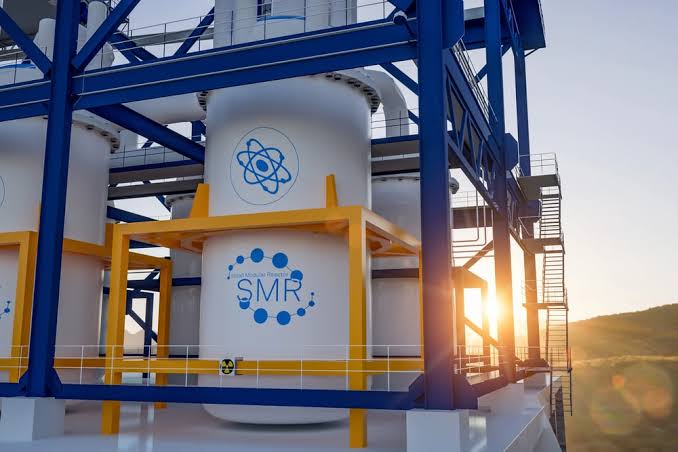
Small Modular Reactors (SMRs) have emerged as one of the most discussed technologies in the global energy sector. Interest in SMRs has grown due to industry’s increasing demand for low-carbon, reliable sources of electricity. Though SMRs are a potential option for supporting renewable energy, decarbonization and energy security, the industry is still in the early stages of commercialization despite significant investment.
What are SMRs?
SMRs are smaller versions of conventional reactors, designed to occupy a much smaller footprint than conventional nuclear power plants. Their modular design allows the components to be factory assembled, then easily transported to the site and can be scaled as demand grows. The energy output of SMRs is typically up to 300 MW in comparison to approximately 1GW for large-scale reactors.
Similarly to large scale nuclear reactors, SMRs use nuclear fission where uranium atoms are split releasing heat, the steam spins a turbine, producing electricity. There are various designs that all follow this concept: Boiling Water Reactor (BWR), Pressurized Water Reactor (PWR), High Temperature Gas-cooled Reactor (HTGR).
Cost & Build-Time Calculator: SMR vs Traditional Reactor
Pick a target plant capacity to compare estimated total cost, build time, and levelized cost of electricity (LCOE) between Small Modular Reactors and a traditional large-scale nuclear power plant of the same size.
⚛ SMR (300 MW)
🏭 Traditional NPP (300 MW)
⚛ SMR (600 MW)
🏭 Traditional NPP (600 MW)
⚛ SMR (900 MW)
🏭 Traditional NPP (900 MW)
⚛ SMR (1,200 MW)
🏭 Traditional NPP (1,200 MW)
Where Does the Industry Stand?
As of 2026, the SMR sector is still largely in the design and licensing phase, with some projects moving construction or early operation.
Currently, the only grid-connected SMR site is the HTR-PM600 in Shidaowan, China created by China Huaneng. The plant became operational in 2021 and produces 210 MW of power using a high temperature helium-cooled reactor. This design is distinct from the light water reactors being developed in the West, but it is the clearest proof of concept to date.
The first commercial SMR site in the Western world is under construction at the Darlington site in Ontario, Canada. In April of 2025, Ontario Power Generation was granted a license to construct the first BWRX-300 of the four planned units, supplying a total of 1200 MW, which aims to be completed by 2028. The excavation work on the site’s shafts and foundation has been completed, as of April 2026.
Poland, aiming to phase out coal, has outline plans to build 24 BWRX-300 units across six locations. In February 2026, an agreement was signed to advance the design through Polish regulatory approval, and the first unit is targeted to be completed by 2030. A separate project in Poland, by NuScale Power, has proposed a plan with six modules with a deployment target for 2029.
Rolls Royce is designing 470MW pressurized water reactors to be deployed in the UK, backed by government funding and is undergoing the regulatory assessment process, with a planned completion of 2032. The Czech Republic is using the same design, with plans for the first unit to be deployed in the early 2030s. Estonia, together with Fermi Energia, is developing plans to build two BWRX-300 units.
Small Modular Reactor (SMR) Projects Around the World
Click a country to expand its SMR project details. Data based on publicly announced projects (GE Hitachi BWRX-300, Rolls-Royce SMR, NuScale, HTR-PM).
GE Hitachi BWRX-300
- First unit targeted for 2028 — 4 units planned
- Boiling Water Reactor (BWR), 300 MW
- Estimated cost: ~1.1bn € (~3,700 €/kW) for first reactor
- Plant footprint: 280m x 170m
- Estimated LCOE: 50–60 €/MWh
- Power regulation: 0.5% per minute
- Lifespan: 60 years (extendable)
GE Hitachi BWRX-300
- First unit targeted for 2030 — 24 units planned across 6 locations
- Boiling Water Reactor (BWR), 300 MW per unit
- Estimated cost: ~1.1bn € (~3,700 €/kW) for first reactor
- Estimated LCOE: 50–60 €/MWh
- 2–3 years build time
NuScale
- Targeted for 2029 — 6 modules planned
- Pressurised Water Reactor (PWR), 77 MW per unit
- Estimated cost: ~1.5bn €
- Estimated LCOE: 90–110 €/MWh (IEEFA)
- Lifespan: 60 years
GE Hitachi BWRX-300
- First unit targeted for 2035 — 2 units planned
- Boiling Water Reactor (BWR), 300 MW
- Estimated LCOE: 50–60 €/MWh (Fermi Energia)
- Lifespan: 60 years (extendable)
Rolls-Royce SMR
- Targeted for 2032
- Pressurised Water Reactor (PWR), 470 MW
- Estimated cost: ~2.5bn € (~5,300 €/kW)
- Plant footprint: 40,000 m²
- Estimated LCOE: 60 €/MWh
- 4–5 years build time · 60 years lifespan
Rolls-Royce SMR
- First unit targeted for early 2030s
- Pressurised Water Reactor (PWR), 470 MW
- Estimated LCOE: 60 €/MWh
- 60 years lifespan
NuScale
- Final investment decision expected this year
- Pressurised Water Reactor (PWR), 77 MW per unit
- Estimated cost: ~1.5bn €
- Estimated LCOE: 90–110 €/MWh (IEEFA)
NuScale
- Project announced — planning stage
- Pressurised Water Reactor (PWR), 77 MW per unit
- Estimated LCOE: 90–110 €/MWh (IEEFA)
HTR-PM (China Huaneng)
- HTR-PM600 — operational since 2021
- High Temperature Gas-Cooled Reactor (HTGR / helium-cooled), 210 MW
- Cost: ~1.2bn €
- Estimated LCOE: 60–100 €/MWh
- 5 years build time
Key Challenges and Limitations
Though the momentum behind SMRs is growing, there are still several economic and technical challenges to overcome before widespread commercial viability is achieved.
- Economic Uncertainty: SMRs are marketed as being cheaper to produce due to factory fabrication, however, due to the infancy of the industry, costs remain high. This was highlighted by the cancellation of NuScale’s Utah project in 2023 due to rising costs estimates, which show the financial risks for early adopters.
- Regulatory Issues: Regulations of nuclear plants vary significantly by country and are complex and strict. Adopting frameworks and regulations originally created for full scale nuclear power plants, to accommodate smaller designs, takes a long time.
- Fuel Supply Chain: While mining raw uranium is diversified, the processing stages present supply risks. Currently the conversion and enrichment stages are highly centralized, Russia controls 22% of the conversion and 45% of the enrichment process. Securing alternative, stable supply chains is a major hurdle for utilities looking to use SMRs.
- Waste Management: Though SMRs produce less radioactive waste than conventional reactors, the waste still requires safe, long-term storage. While some advanced SMR designs aim to improve fuel efficiency and reduce waste volume, no commercial solution has eliminated the need for its safe disposal.
Looking Ahead
SMRs have the potential to be a major player in the transition to low carbon energy, providing flexible generation alongside renewable energy sources. However, the industry is still in the early stages. The widespread deployment of SMRs will depend on proving that SMRs can be delivered timely, safely and at a competitive cost. The success of SMRs depends on the outcome of the first commercial projects in the upcoming decade, they will determine if SMRs become a key player in global energy.