As electrification accelerates and green technologies reshape consumption and production patterns, distribution networks must become more resilient and data-driven. To support this transition, the project delivers a digital platform that enables the customer to analyze current grid behavior, anticipate future loading, and assess the impact of growing EV, heat pump, and PV adoption.
By integrating accurate historical modelling with advanced scenario forecasts, the solution strengthens planning capabilities, enhances visibility of upcoming constraints, and supports more efficient, flexible, and reliable grid development.
 Back
Back
Digitalization
Distribution network
Addressing the Challenges of High DER Penetration with Scenario-Based Load Forecasting and Network Planning
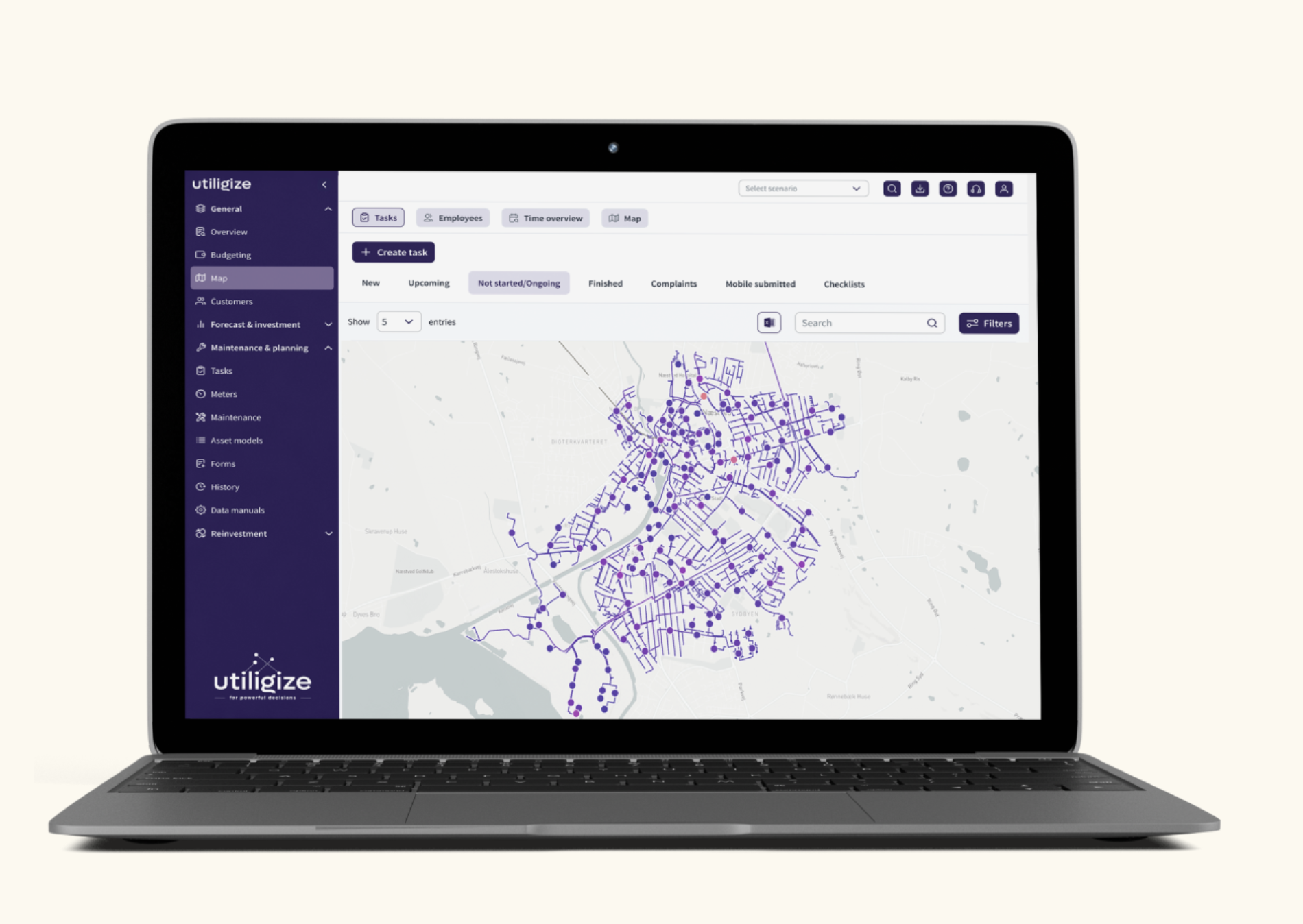
Completed
Description
Problem
Electricity distribution networks are undergoing rapid transformation. Rising electrification, increased DER penetration, and shifting consumption patterns are placing pressure on existing assets. Traditional planning approaches struggle to keep pace with these developments, often lacking:
- Reliable historical insight into how substations and cables are loaded
- An always up-to-date digital grid model using timeseries meter data instead of standard load profiles or max values
- Accurate forecasts of future demand under realistic adoption scenarios
- Clear visibility into where flexibility could offset or defer grid investments
- Intuitive tools to communicate upcoming challenges and technology-driven changes
This creates uncertainty around when and where to invest, how to prioritize resources, how to share future needs among various stakeholders, and how to integrate flexibility as a strategic alternative to reinforcement
Solution
Utiligize has delivered a full implementation of its Forecast & Investment platform, enabling the customer to take a data-driven and flexibility-aware approach to network planning over a long-term horizon.
Key capabilities include:
- Historically Accurate Load Flow Analysis, High-precision reconstruction of loading for substations and cables. This establishes a dependable baseline for understanding current grid conditions.
- Future Load Scenarios, Forecasted loading trajectories for the selected grid areas, including the detection and modelling of distributed energy resources (DERs) to improve prediction accuracy. These insights support investment calculations and scenario planning up to 2030 at hourly resolution, enabling clear visibility into emerging bottlenecks and reinforcement needs.
- Flexibility Needs Assessment, Identification of locations where flexibility services – such as demand response or DER control – may be required to maintain reliability, defer or even replace traditional reinforcement.
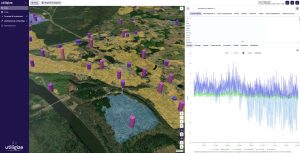
- Technology Heatmaps, Interactive visualizations showing expected developments in EV charging, heat pumps, and PV installations. These maps reveal growth hotspots and help align investment timing with expected technology adoption.
Status and progress
With the analytical platform now operational at three 110/10 kV primary substations with 29000 connection points load data, ESO has access to a wide range of insights derived from both historical and projected grid conditions. By modelling DER behavior, consumption patterns, and emerging technology adoption, the system enables planners to understand the long-term evolution of load at a much higher resolution than previously possible.
Results
The scenarios generated support decisions related to reinforcement timing, flexibility activation, and strategic investment optimization up to 2030. The integrated visualizations – including technology heatmaps and flexibility indicators – provide a clear and accessible overview of future development trends across the selected grid areas.
These advancements significantly strengthen ESO’s ability to analyze grid impacts, evaluate alternative pathways, and integrate flexibility into modern network-planning workflows.